LOB

MCP for the
Business Intelligence of
European SMEs
and organizations

The isolation of AI
from other digital tools can
compromise the quality of its results

ILUMINA

Integrating artificial intelligence
with business software and databases

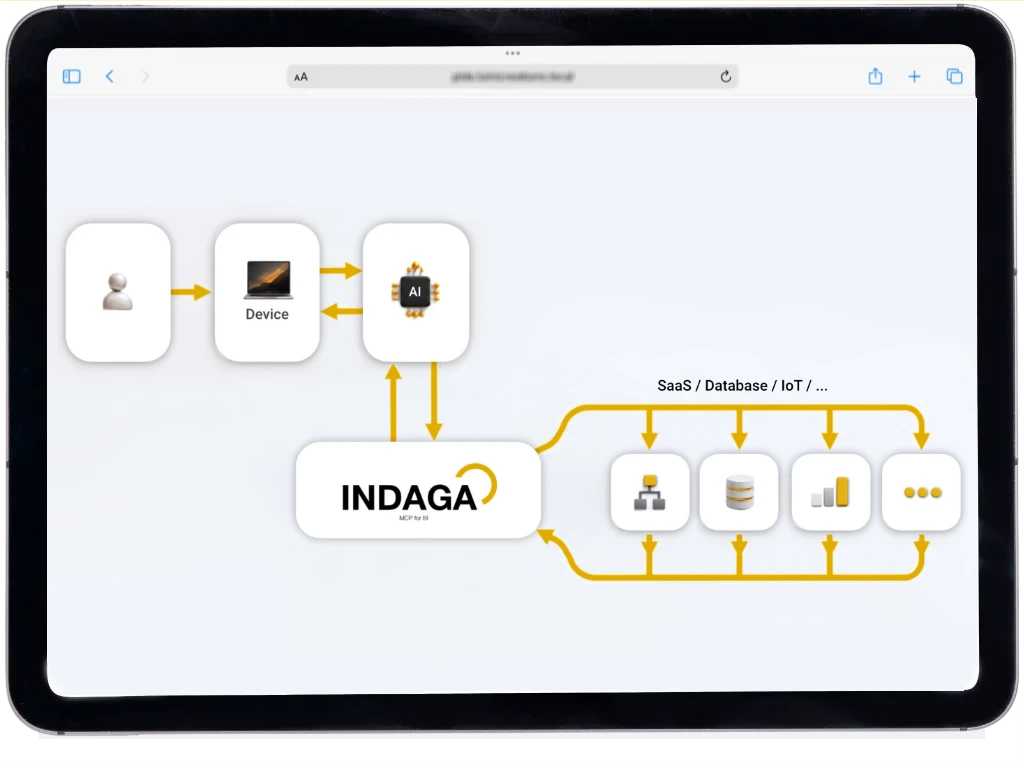
With INDAGA we offer a tool that allows the AI assistants used by the organization - such as ChatGPT or Claude - to access business data in a controlled manner facilitating dynamic and advanced business intelligence.

A flexible and modular solution
designed to adapt
to your organization’s reality

The adoption of artificial intelligence in business processes often raises questions about the technology’s operational value and the tangible benefits it can deliver. 

One of the main factors limiting its potential lies in the level of integration with the digital ecosystem; in order to generate coherent and useful results, AI models need structured, organized, contextualised and updated data. 

Overcoming this limitation and moving towards a more advanced use of AI requires an evolution of the company’s IT architecture, through a communication channel that enables direct interaction between artificial intelligence and the organization's databases, software, applications, devices and services, via the MCP protocol ( acronym for Model Context Protocol) developed by Anthropic. 

INDAGA is a cross-platform connector built on the MCP standard, designed for advanced Business Intelligence. It enables users to analyse data from multiple sources through a single AI interface, protecting information and providing up-to-date data in real time.

Safety first

We understand data as an asset, which is why we process it on servers hosted by our provider within the European Union, which enhances solution efficiency, facilitates compliance with GDPR and current regulations, strengthens information protection and offers transparency.

Expands the user's operational capabilities
without altering their usual experience

INDAGA enables dynamic access to Business Intelligence tables, charts and reports with AI, without relying on predefined and static dashboards, providing greater autonomy and flexibility in data analysis.

It offers a catalogue of pre-integrated connectors that enable communication with SaaS applications available on the market, and supports the implementation of custom connectors developed for the organisation's specific IT ecosystem.
MCP Business Intelligence MCP Business Intelligence

Let's work together

INDAGA adapts to your organization’s unique reality. If you would like information on how we can help you connect your AI assistants with organization’s data, please contact us. We value human relationships, therefore we prefer a direct approach rather than virtual assistants or automated responses.

Frequently Asked Questions

What is MCP?

MCP is the acronym for "Model Context Protocol". 

It is a standard that defines how an artificial intelligence application can connect to external systems, through a dedicated and private interface which makes available to the AI ​​certain operational functionalities defined according to the tasks and operations it is authorized to perform. 

It establishes a protected and structured communication channel between artificial intelligence and the organisation’s digital tools, such as databases, software or applications, allowing the AI to retrieve authorised information and interact with designated business services in accordance with the rules and permissions defined during implementation. 

This integration transforms the AI ​​assistant's conversational interface into an advanced tool for data analysis and workflow management, enabled to interact natively with the rest of the company's IT ecosystem.

What is Business Intelligence?

Every action leaves a trace
Sales, marketing campaigns, inventories, suppliers, foot traffic, opening hours, or any other activity generates data that, when interpreted, contributes to a broader and deeper understanding of the organization and the commercial context in which it operates.

A data point is an objective representation of a fact, an action, or a condition and, by itself, is without value; it acquires value when interpreted within a context, and importance when linked to a decision or an action.

Contextualizing data means correlating it to other data and to the surrounding environment, situation, or the moment in which it occurred.

The interpretation of contextualized data generates useful information for understanding the business reality.
Ask questions to understand
The advanced and systematic level of the process that transforms data into information is called Business Intelligence (BI).

BI is a set of processes and tools for gathering and analyzing data from multiple internal and external company sources, in alignment with its unique characteristics.

The goal of BI is to provide the information necessary to make informed and fact-based decisions.

Therefore, the first step to implementing BI in your business strategy is to define a specific question, or a hypothesis, about your activity.
Interact with dynamic reports
BI provides access to custom reports and dashboards, simplifying the process of finding answers.

The reading of personalized reports is quick and intuitive; the ability to activate filters for selections or comparisons allows for a more in-depth analysis.

Data is presented clearly and effectively, ready to be transformed into actionable insights.

BI scales with your needs, enabling reports to adapt to new questions or hypotheses.
From data to answers
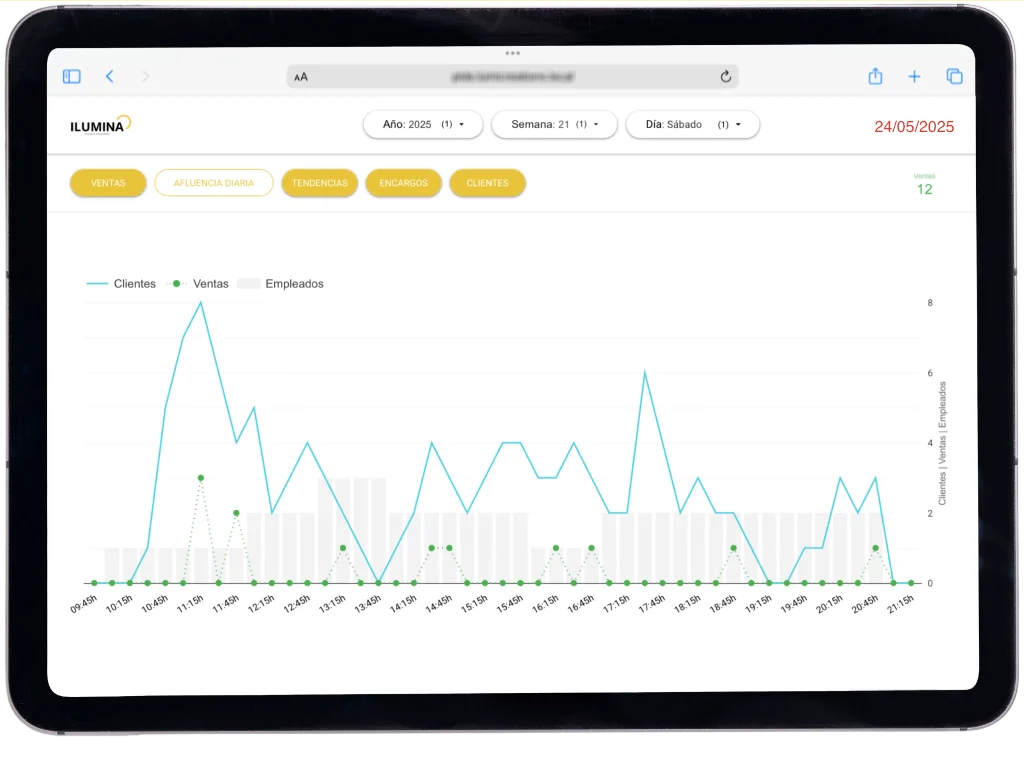
To experience the potential of BI, we invite you to explore this dashboard simulating the operations of a bookstore using realistic, fictional data. Interact with the filters to segment indicators and transform data into information. Business Intelligence
What is data?

Every action leaves a trace
A piece of data is an objective representation of a fact or a condition.

It can take various formats, such as a number, a word, a symbol, a record, or a bit.

On its own, it has no value and lacks complete meaning; it gains value when interpreted within a context and becomes significant when linked to a decision or action.

Putting data into context means relating it to other data, such as the environment, situation, or the moment in which it occurred.

The interpretation of contextualized data creates useful information that contributes to a broader and deeper vision of reality.

What is a data source?

A data source is any location, system, medium, or resource from which data originates and is collected. 

It can take various formats, such as a database, software, a form, a file, an API, a sensor, an IoT device or a digitized physical document.

What does data-driven mean?

Data-driven refers to an approach or culture in which decisions are based on the analysis and interpretation of data, rather than relying solely on assumptions or intuition.

With this methodology, information and concrete evidence obtained from data guide the way forward, helping you make informed decisions, better understand behaviors, find commercial opportunities, identify areas for improvement, optimize processes and increase your organization's effectiveness and responsiveness.

What is the DX ecosystem?

DX is our modular and flexible network of interoperable services for data capture, integration, organization, automation, and visualization, which we offer as a solution for comprehensive data management.

Designed for European SMEs and organizations that want to extract value and insights from data, or integrate into the data economy, it is structured so you can activate the exact services you need, allowing you to scale them according to your organization's requirements.

It is composed of:

CAPTA : Data extraction
ORGANIZA : Data governance and cleansing
ILUMINA : Business Intelligence
INDAGA : MCP for Business Intelligence
FLUYE : API integration
ACTIVA : Automated event triggering
PIDE : SaaS for Purchasing Management

How do you offer the service?

We offer our services remotely, using technology to interact with and support your organization regardless of its geographical location. 

For information on our approach, please visit our About page.
 

What is the service cost based on?

The cost of our services is based on a dual model.

Initial implementation services, custom development and consulting are quoted using a personalized approach that fit your organization's unique needs and goals, considering the scope and complexity of the work, estimated hours of dedication, and specific technical requirements.

Ongoing services such as SaaS, BI, API, or data management operate under a subscription model with a recurring monthly or annual fee that covers service maintenance.

Tell us what challenge you want to solve, and we will prepare a customized proposal for you.

Shall we talk?

Reject
non-essential
Accept
all cookies