Data management and 
Business Intelligence 
for European 
hotel chains

We help strengthen the data area
to facilitate information management,
business analysis, and decision-making

Custom digital and data 
sovereignty solutions

We combine programming, data processing, process analysis and automation to provide hotel chains with custom digital and phygital solutions.

We know that each organization has unique and specific needs, which is why we have organized our offering into an ecosystem of modular and flexible services.

Extract value and insights from data, manage with a data-driven approach, improve competitiveness, examine metrics, work with data and advance toward medium- and long-term goals.

Our solutions have a systemic, scalable, and multilateral approach, oriented towards business operations and user experience; designed to be an integral part of internal processes and the organization's digital ecosystem, they natively facilitate integration with other tools.


Hotel system integration

We connect digital tools through custom API integrations to enable a connected digital environment where systems communicate and exchange data automatically.

In doing so, we reduce software fragmentation without requiring the team to give up their usual applications; each tool continues to fulfill its function while data flows between them in an organized and actionable way.

Depending on the connection capabilities of each system, we can integrate data from PMS, ERP, POS, procurement systems, spreadsheets, CRMs, booking engines, marketing platforms, reporting tools, internal databases, and other applications used by the organization.

Data governance
for hotel chains

We centralize, normaliz, and organize data scattered across different areas of the hotel business to create a coherent information base ready for analysis.

Data governance allows for unifying criteria, reducing duplications, improving information quality and facilitating new workflows between departments, hotels and management teams.

Depending on the available sources and connection possibilities, we can structure data related to:
 
  • · Bookings: occupancy, cancellations, channels, average length of stay (LOS) and booking lead time.
  • · PMS and hotel management: rooms, check-in, check-out, availability and guest history.
  • · Revenue management: ADR, RevPAR, room revenue, rates and demand forecasting.
  • · Procurement and suppliers: orders, vendors, costs, variances, prices, and product categories.
  • · Finance: budgets, margins, operating expenses (OPEX), cost centers and profitability.
  • · Marketing and Sales: campaigns, leads, conversion, booking source and channel performance.
  • · Operations: incidents, response times, maintenance, housekeeping and internal tasks.
  • · Guest Experience: surveys, reviews, complaints, satisfaction and online reputation.

Hotel insights and KPIs

We transform data into useful information to help executive and operational teams extract value from data, support business objectives, identify improvement opportunities and back decision-making with objective criteria.

Through custom dashboards and analysis models, we turn scattered data into KPIs to monitor the evolution of the hotel chain by property, department, channel, period, or business line.

Among other indicators, we can help monitor:
 
  • · Occupancy by hotel, area, or period.
  • · ADR, RevPAR and TRevPAR.
  • · Cost per booking.
  • · Margin per establishment.
  • · Procurement trends and costs per supplier.
  • · Profitability by business line.
  • · Cancellation rate.
  • · Comparative analysis between properties.
  • · Budget variances.
  • · Demand trends.
  • · Operational productivity.
  • · Incidents by area or property.

Safety first

We process data on servers hosted by our provider within the European Union, which strengthens information protection, facilitates compliance with current regulations and enhances solution efficiency.

We are for you if:

You are looking for a unified view of the business and the management of multiple properties.
You need to unify or centralize data from different properties, protect information, govern data with agility, integrate hospitality digital tools without slowing down operations, and mantain traceability.
You want to monitor hotel KPIs or metrics and improve decision-making based on real data.

Let's work together

If you would like information on how we can help you, please contact us. We value human relationships, therefore we prefer a direct approach rather than virtual assistants or automated responses.

We invite you to know about us; visit the pages of our solutions and explore the range of services.

Frequently Asked Questions

How do you offer the service?

We offer our services remotely, using technology to interact with and support your organization regardless of its geographical location. 

For information on our approach, please contact us.
 

What is the service cost based on?

The cost of our services is based on a dual model.

Initial implementation services, custom development and consulting are quoted using a personalized approach that fit your organization's unique needs and goals, considering the scope and complexity of the work, estimated hours of dedication, and specific technical requirements.

Ongoing services such as SaaS, BI, API, or data management operate under a subscription model with a recurring monthly or annual fee that covers service maintenance.

Tell us what challenge you want to solve, and we will prepare a customized proposal for you.

What is the service ecosystem?

We offer a modular and flexible network of interoperable services for data capture, integration, organization, automation, and visualization. exactamente los servicios que necesitas, permitiéndote encargar tareas y escalarlas a medida de la evolución de vuestros objetivos. 

Designed for organizations that work with data, seek to extract value from it, or are looking to start doing so, it is is structured to allows you to activate the exact services you need, and scaling them as your objectives evolve. exactamente los servicios que necesitas, permitiéndote encargar tareas y escalarlas a medida de la evolución de vuestros objetivos. 

For more information, please contact us or visit our website.

What is Business Intelligence?

Every action leaves a trace
Sales, marketing campaigns, inventories, suppliers, foot traffic, opening hours, or any other activity generates data that, when interpreted, contributes to a broader and deeper understanding of the organization and the commercial context in which it operates.

A data point is an objective representation of a fact, an action, or a condition and, by itself, is without value; it acquires value when interpreted within a context, and importance when linked to a decision or an action.

Contextualizing data means correlating it to other data and to the surrounding environment, situation, or the moment in which it occurred.

The interpretation of contextualized data generates useful information for understanding the business reality.
Ask questions to understand
The advanced and systematic level of the process that transforms data into information is called Business Intelligence (BI).

BI is a set of processes and tools for gathering and analyzing data from multiple internal and external company sources, in alignment with its unique characteristics.

The goal of BI is to provide the information necessary to make informed and fact-based decisions.

Therefore, the first step to implementing BI in your business strategy is to define a specific question, or a hypothesis, about your activity.
Interact with dynamic reports
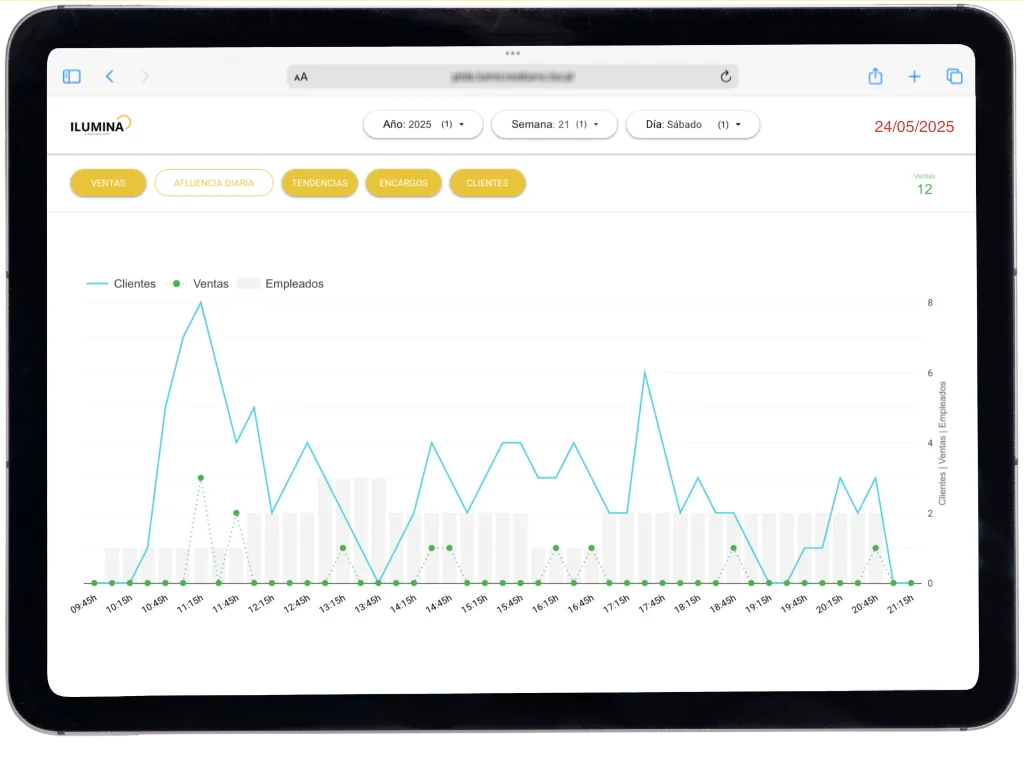
BI provides access to custom reports and dashboards, simplifying the process of finding answers.

The reading of personalized reports is quick and intuitive; the ability to activate filters for selections or comparisons allows for a more in-depth analysis.

Data is presented clearly and effectively, ready to be transformed into actionable insights.

BI scales with your needs, enabling reports to adapt to new questions or hypotheses.
From data to answers
To experience the potential of BI, we invite you to explore this dashboard simulating the operations of a bookstore using realistic, fictional data. Interact with the filters to segment indicators and transform data into information. Business Intelligence
What is a KPI?

KPI is the acronym for "Key Performance Indicator".

It is an indicator of progress toward a set goal; a measurable value that monitors the achievement of that goal.

What is a data source?

A data source is any location, system, medium, or resource from which data originates and is collected. 

It can take various formats, such as a database, software, a form, a file, an API, a sensor, an IoT device or a digitized physical document.

What does data cleaning mean?

Cleaning data means reviewing, correcting and removing incorrect, incomplete, corrupted, poorly formatted or duplicated information within a dataset.

The primary goal of this process is to maximize data quality, ensuring they are usable and faithfully represent reality.

What is data governance?

Data governance is the framework that defines how to manage data.

It means establishing a system of policies, processes, standards and roles, for the quality, security, availability, integrity and usability of data.

What is a data infrastructure?

A data infrastructure is a set of software, tools, and devices that interact with each other over a network, communicating via APIs.

Working in a connected environment allows for managing, processing, storing and synchronizing data across its components, so information is accessible at all times for immediate use by people, software, and automated processes. Furthermore, it facilitates remote digital interaction with third parties, such as customers or suppliers.

What is an API?

API is the acronym for "Application Programming Interface".

It is a way to connect different software, systems, or digital tools over a network, so they can communicate with each other and exchange data.

This methodology helps create modular software architectures and build digital infrastructures, fostering the development of new solutions and facilitating service delivery in the digital market.

What is SaaS?

SaaS is the acronym for "Software as a Service".

It is a software distribution model where the program is hosted in the cloud, and you access it from anywhere via the Internet, without the need to install, maintain or manage the software on your own devices.

This allows you to use the tool as a service, saving on costs and reducing the burden on your technical team.

The SaaS provider is responsible for the infrastructure, maintenance and software updates.

Shall we talk?

Reject
non-essential
Accept
all cookies